



Parent-Child Interaction Therapy
What is Parent-Child Interaction Therapy (PCIT)?
PCIT is an evidence-based behavioral therapy designed for caregivers and their children who often exhibited emotional and behavioral problems. PCIT emphasizes improving the quality of parent-child relationships and changing the parent-child interaction pattern. During the treatment process, the child and the caregiver will participate in the treatment together.
Suitable for:
Children: 2 to 7 years old, who have the following challenging behaviors, such as frequent impulsiveness, temper tantrums, crying, aggression or oppositional behavior. Parents: suffering from parenting stress and want to learn more effective parenting methods.


PCIT treatment model
- In the early stage of treatment of PCIT, the therapist will teach parents individually skills on strengthening parent-child relationships and discipline. Parents need to practice these skills during treatment and at home.
- In subsequent sessions, the therapist will spend most of the time coaching parents on how to apply these skills. Therapists typically observe parent-child interactions in a playroom through a one-way mirror and provide real-time coaching to parents on their interaction with the child via a "Bluetooth earpiece / in-ear coaching system." With technological advancements, remote coaching via video conferencing is now also possible, reducing the need for a specific therapy space.
- At the end of each session, the therapist and parents will collaboratively decide on the focus for the 5-minute practice (also known as "special play time") to be conducted at home during the following week, allowing parents to practice and become proficient in the relevant skills.



PCIT's
Two Core Treatment Phases
Phase One: Child-Directed Interaction (CDI) — Building a Close Parent-Child Relationship
The first phase helps parents establish a warm parent-child relationship. Parents will learn and apply the "PRIDE skills," which are proven to help children feel calm, secure, and good about themselves in their relationship with their parents.
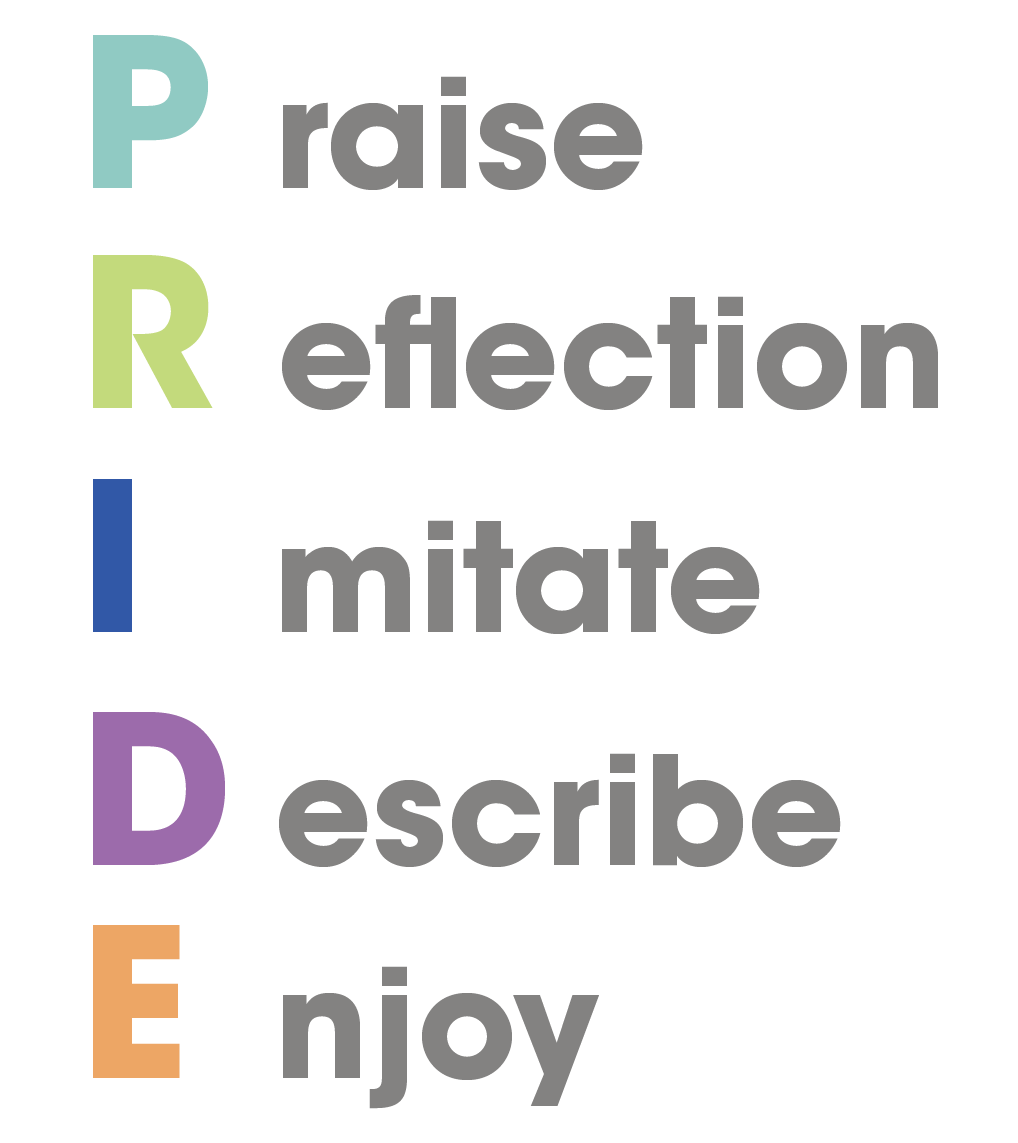
Specifically praise the child's positive behaviors
Reflect the child's speech
Imitate the child's appropriate behaviors
Describe the child's appropriate behaviors
Enjoy the time with the child
Expected outcomes of Phase One treatment include:
*Reduced frequency, severity, and/or duration of the child's tantrums
*Decreased activity level
*Reduced negative attention-seeking behaviors (e.g., whining and bossiness)
*Increased security and attachment to the primary caregiver/parent
*Increased attention span
*Enhanced self-esteem
*Increased prosocial behaviors (e.g., taking turns in play)
*Reduced parental frustration
Phase Two: Parent-Directed Interaction (PDI) — Enhancing Child Compliance
The second phase of treatment enables parents to become more confident and calmly manage their child's most challenging behaviors, and to be consistent, predictable, and persistent in discipline. In this phase, parents learn to give effective commands to their child, help the child accept parental limits, comply with parental instructions, respect family rules, and exhibit appropriate behavior in public places.
Expected outcomes of Phase Two include:
*Reduced frequency, severity, and/or duration of the child's aggressive behaviors
*Reduced frequency of destructive behaviors (e.g., intentionally breaking toys)
*Decreased defiance
*Increased compliance with adult requests
*Greater respect for family rules
*Improved behavior in public places
*Increased calmness and confidence in parents when implementing discipline
How long does PCIT treatment take?
If parents can consistently attend weekly 1-hour therapy sessions with their child and complete the daily 5 to 10-minute "special play time" homework, they will see positive changes in their child and family relationships.
In general, PCIT can be completed within 12 to 20 sessions, but there is no fixed time limit for the treatment; it will be adjusted according to the individual needs of the parents. Treatment is considered complete when parents have mastered parenting skills from both core phases and the child's behavior is rated within the normal range on a child behavior checklist.
The Theoretical Basis of PCIT
- PCIT is primarily based on Diana Baumrind's (1966) developmental parenting theory, integrating attachment theory and social learning theory to teach parents how to adopt an authoritative parenting style, that is, a parenting approach that combines care, effective communication, and firm discipline.
- Attachment theory posits that parental warmth and responsiveness contribute to building a secure parent-child relationship, which in turn promotes children's social and emotional regulation skills. Conversely, unresponsive parenting styles may lead to insecure attachment, which is then associated with child aggression and social difficulties
- The behavioral techniques in PCIT are derived from social learning theory, which emphasizes how to shape a child's behavioral patterns through the interaction of environment and behavior. Through PCIT, parents can learn how to set clear rules and consistently apply discipline within a warm parent-child relationship, improving the psychological well-being of both parent and child
Features and Efficacy of PCIT Services

Working with the Parent and Child Together
• The participating parent and child are always working together in the therapy room for each session. This ensures that both the child and parent can learn within a real time interactive context.

Real-Time Feedback via Earpiece, Enabling Parents to Learn and Apply Immediately
• The therapist uses "bug-in-the-ear coaching" (real-time earpiece guidance) to provide parents with support and immediate professional feedback while they interact with their child. This allows parents to use appropriate parenting skills with greater confidence in real-time, effectively responding to the child's current behavior. The therapist's feedback also supports parents in quickly correcting their parenting techniques, enhancing learning efficiency and speeding up mastery of PCIT skills.

Live Observation and Real-Time Coaching
• By observing the actual parent-child interaction during the play therapy process, the therapist can more quickly and accurately understand the core of the parent's unique disciplinary difficulties. This allows for adjustment of the coaching direction and focus of each session, teaching parents the necessary parenting skills.

Immediate Experience of the Effects of Positive Parent-Child Interaction
• Parents can immediately experience the effects of positive parent-child interaction patterns and concretely grasp effective disciplinary techniques. This boosts their parenting confidence, enabling them to extend the learned strategies and skills from the therapy room to their daily lives.
Efficacy of PCIT
• Research shows that PCIT has significant effects in improving behavioral problems in preschool children. After treatment, children's behavior typically returns to the normal range. Studies have also confirmed that PCIT yields superior outcomes compared to waitlist control groups and traditional parent education programs.
• Based on rigorous randomized controlled trials, PCIT has been classified as a "Probably Efficacious" treatment, particularly for children aged 3 to 6 with behavioral problems (Eyberg, Nelson, & Boggs, 2008). PCIT has also been rated by Blueprints for Healthy Youth Development as a "Promising" treatment approach for young children with emotional and behavioral problems.
PCIT Individual Case Services
Our Professional Treatment Approach
Our treatment approach is centered on Parent-Child Interaction Therapy (PCIT), and we provide corresponding professional therapy and training tailored to the different age groups and needs of children:
Over the past thirty years, PCIT has been extensively researched clinically worldwide. In addition to the traditional PCIT model for young children aged two to seven, specialized treatment guidelines have also been developed for various difficulties that arise during childhood development, such as Attention-Deficit/Hyperactivity Disorder (ADHD) and childhood selective mutism.
Currently, the professional PCIT treatment programs are as follows:
Parent-Child Interaction Therapy
PCIT (Traditional Version)
Suitable for children aged 2 to 7 and their parents, aiming to improve child behavior problems and cooperation by enhancing the quality of parent-child interaction and the parent-child relationship
Parent-Child Interaction Therapy—Toddlers
PCIT-T (Toddler Version)
Suitable for toddlers aged 12 to 24 months and their parents, promoting parent-child attachment and emotional regulation of both the child and the parent
Parent-Child Interaction Therapy—Older Children
(PCIT for Older Children Version)
Suitable for older children aged 7 to 12 and their parents, enhancing children’s emotional regulation and behavioral control skills
Parent-Child Interaction Therapy—Anxiety or Selective Mutism
(PCIT for Anxiety & Selective Mutism)
Helps children with anxiety or Selective Mutism and their parents, aiming to enhance the child's social bravery and verbal expression skills
All of the above treatments are based on scientific evidence and are personally guided by experienced PCIT certified therapists, so that every family can get the appropriate support.



Why Choose Us?
Professionally Certified Therapists
Led by experienced PCIT therapists certified by PCIT International
Scientifically Proven Treatment Method
PCIT is widely used globally and has been proven to have long-term effects in improving parent-child relationships and behavioral problems
Personalized and Family-Oriented
Every child and family has distinct needs; we provide personalized treatment plans
Safe and Warm Environment
We are committed to providing a supportive and understanding therapeutic space where both children and parents feel safe to grow
• If you wish to improve your parent-child relationship, help your child overcome behavioral or emotional problems, or learn more effective parenting skills, we are always here to support you!
to learn more about our service details or schedule a free consultation session now!